
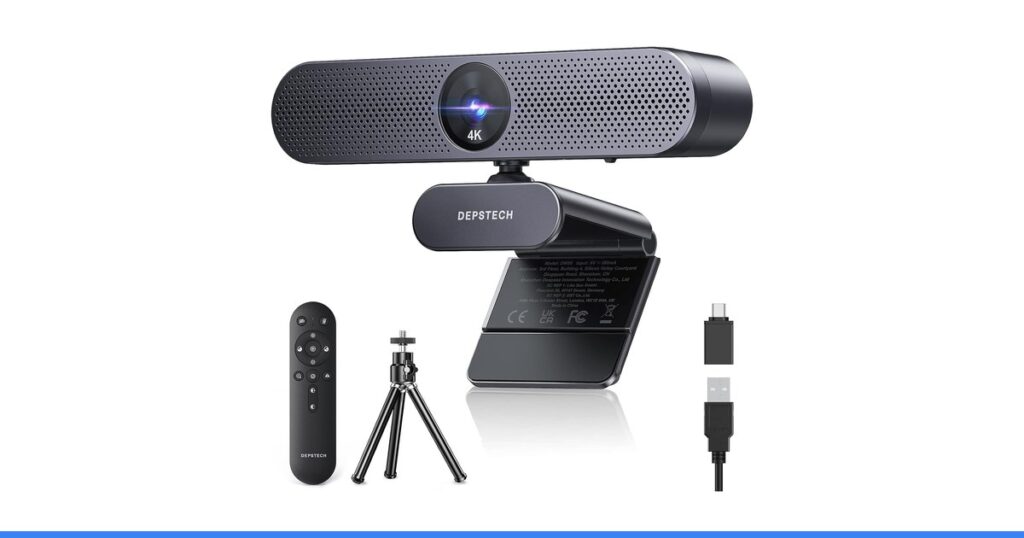
Most tech specs on a product page are true. That is what makes them effective, and it is why comparing numbers is such an unreliable way to buy. We took four claims that sell products every day and checked each one against 43,264 buyer ratings. Every number below is accurate. Every one of them is also misleading, in a way the listing never has to admit.
The claims, and what the record says
| The number | What it promises | What buyers report |
|---|---|---|
| 4K on a webcam | 3840×2160 on a Sony sensor, four times the pixels of 1080p | Calls compress to 1080p; the 1080p rival wins 4.6 x 21,983 vs 4.3 x 1,087 |
| 240Hz on a portable monitor | 2560×1600 at up to 240Hz with 100% sRGB colour | 286 ratings, against 13,146 for the plain 1080p screen that beat it |
| 24-hour speaker battery | Up to 24 hours of playtime per charge | 1,918 buyers raise battery life; the figure assumes half volume, lights off |
| A 4.8-star rating | 4.8 stars – the joint highest rating in its comparison | From 3,566 buyers, while the winner shared 4.8 with 24,108 |
How we check a claim
The method is the same for every claim. First we read what the listing actually promises, in its own words. Second we read what buyers repeat afterwards – the recurring themes in the review record, and how many people raised each one. Third we look for the gap between the two. That gap is the part of the spec sheet you can stop paying for, and it is where all four of these numbers come apart.
Myth 1: 4K on a webcam

The most effective spec in the category, and the one that changes your video call least.
What the listing promises
The listing is accurate. A 1/2.55-inch Sony sensor captures 3840×2160 at 30fps, genuinely four times the pixels of Full HD, and 97 reviews praise the video quality while 128 praise the build. Nobody is being misled about what the sensor does.
What the review record says
The problem is what happens to those pixels next. Video platforms compress your feed, and what reaches the person watching is usually 1080p or less. Meanwhile the 1080p Logitech C920x carries 4.6 stars from 21,983 ratings against this camera’s 4.3 from 1,087, and 792 of those reviews talk specifically about the picture.
What to check instead
Ask where the video ends up. If it goes down a call, the platform picks the resolution, not your camera – so buy on lens quality and low-light handling instead. 4K is worth paying for when you record locally or zoom into documents and demos.
Seen on 4K on a webcam (example product) — 4.3 stars from 1,087 ratings.
Myth 2: 240Hz on a portable monitor

The best panel in its comparison, and it still finished last.
What the listing promises
Also true, and genuinely impressive: 2K resolution, refresh rates up to 240Hz, full sRGB coverage and a full-size HDMI port. 65 reviews single out the image quality and 31 the colour. As a panel, nothing else in that comparison came close.
What the review record says
Two things undo it. A 240Hz screen needs a machine that can push 240 frames per second to a second display, which most work laptops cannot. And its record is 286 ratings against 13,146 for the plain 1080p KYY that finished first – forty-five times the evidence.
What to check instead
Check what is driving the screen before you pay for refresh rate, and read the brightness mentions instead: 26 buyers raised brightness here, and brightness is what you actually notice at a desk near a window. Buy 2K and 240Hz for gaming or colour work, not for spreadsheets.
Seen on 240Hz on a portable monitor (example product) — 4.4 stars from 286 ratings.
Myth 3: 24-hour speaker battery

A true number, measured in conditions nobody actually listens in.
What the listing promises
The claim is up to 24 hours per charge, and the listing does disclose the conditions: roughly half volume with the light ring switched off. This is a genuine bestseller – 38,325 ratings and a top-40 rank across all of Electronics – not a fringe product.
What the review record says
Almost nobody reads the conditions, and the record shows the result: 1,918 reviews raise battery life as a mixed theme. That is not a fault so much as arithmetic – volume and lights both cost hours. For contrast, the Turtlebox quotes three days and its battery mentions come back positive rather than mixed.
What to check instead
Find the test conditions before you trust an hours figure, and check whether battery appears as a complaint theme at scale. At real listening volume, treat the printed number as a best case rather than a promise.
Seen on 24-hour speaker battery (example product) — 4.5 stars from 38,325 ratings.
Myth 4: A 4.8-star rating

The number everyone trusts most, and the easiest one to misread.
What the listing promises
This rating is completely genuine and the product is good: 160 reviews praise the ergonomics and 139 the rotating base, which no rival in that comparison offers at all. It is not a fake score or a bought one.
What the review record says
It placed fourth anyway, because three of the four stands in that comparison sat at 4.8 – so the stars separated nothing. What separated them was the crowd: 3,566 buyers here against 24,108 behind the winner, whose record is dominated by 1,705 mentions of quality and 1,195 of sturdiness.
What to check instead
Read the rating next to the count, always. When several products share a score, the number of buyers is the tie-breaker, and the repeated themes tell you what those buyers actually experienced.
Seen on A 4.8-star rating (example product) — 4.8 stars from 3,566 ratings.
What to read instead
There is one number on a product page that is hard to fake, and it is not on the box: the number of people who bought the thing and came back to say something. Read the rating next to that count, then read what those buyers repeat. A 4.6 from twenty thousand people who keep mentioning the picture tells you more than any resolution, refresh rate or battery figure printed on the packaging – and unlike the specification, it already includes everything that went wrong.
Category by category is where this becomes practical. The projector spec check takes four mini projectors apart on brightness and sound, and the cheap fitness tracker piece applies the same reading to an entire price tier.
Frequently Asked Questions
Is a 4K webcam better than 1080p?
Rarely, for calls. Meeting platforms compress your video and usually deliver 1080p or less to the person watching, so the extra pixels never arrive. In our webcam comparison the 4K camera finished fourth and a 1080p Logitech won with 21,983 ratings behind it. 4K earns its place when you record locally or zoom into fine detail.
Does a 240Hz portable monitor make sense?
Only if the machine driving it can produce 240 frames per second on a second display, which most work laptops cannot. For documents and calls a 1080p panel looks the same at normal viewing distance. Brightness is the specification people actually notice at a desk, and it is rarely the one advertised.
Why does my speaker battery never last the advertised hours?
Because the quoted figure is measured under laboratory-friendly conditions – typically around half volume with any lights switched off. The listing usually says so in the small print. At real listening volume with the light ring running, expect a fraction of the printed number.
Is a 4.8-star rating better than a 4.5?
Not on its own. A 4.8 from a few hundred buyers is a promise; a 4.5 from forty thousand is a track record that has survived shipping damage, firmware updates and years of use. When several products share the same score, the rating has separated nothing and the count is the only tie-breaker left.
What should I look at instead of specs?
Three things, in order: how many people rated the product, what themes those reviews repeat, and whether the headline specification matches something you actually do. If a claim rests on a small sample or hides its own test conditions, treat it as marketing rather than information.
What actually matters in this category
Researched from real buyer evidence by the Technocastel editorial team — last reviewed 22 August 2026.
The most useful habit in this whole article takes five seconds. Read the star rating next to the number of buyers behind it, every single time. Sorting by rating ranks promises; reading the count ranks evidence. Nearly every mistake in this article comes from skipping that one step.
Match the specification to what you actually do. A resolution your platform will compress, a refresh rate your laptop cannot feed, and a battery figure measured at half volume are all real numbers describing situations you will never be in. The question is never whether the number is true, it is whether it reaches you.
Read the complaint themes, not just the score. A product can hold a high rating while thousands of its buyers repeat the same warning – battery life, reliability, connection trouble. Those themes are the closest thing to a long-term test that exists for most consumer tech, and they are free to read.
Finally, be suspicious of any claim that hides its own conditions. Hours quoted at an unstated volume, speeds that need hardware you were not told about, and scores built on a handful of reviews are not lies exactly – they are numbers that stop being true the moment you take them home.
The same check, category by category
- Cameras, on megapixels against the star rating: Camera Megapixels: The Myth
- Mini projectors, on brightness and built-in sound: Projector Specs Don’t Mean What You Think
Related guides
- The 4K camera below finished fourth in our webcam comparison
- The 240Hz screen finished fourth in the portable monitor comparison
- The 4.8-star stand placed fourth in our laptop stand comparison
- The same method applied to projectors: projector specs that don’t mean what you think
- And to a whole category’s failures: what goes wrong with cheap fitness trackers
How this article was made. The ranking comes from the public review record — rating counts, star distributions and the themes owners repeat — tallied with software, then read, judged and written up by Abdelaziz Sabbah. We do not lab-test these products and no brand pays for placement; our full method is here. Review counts are a floor at the date above and prices change, so confirm both on the retailer’s page before you buy. As an Amazon Associate we earn from qualifying purchases — affiliate disclosure.