
Buy a rice cooker and the first number you see is a cup count. One on this page is called 2-Cup. One is called 4-Cup Uncooked / 8-Cup Cooked. Two of them are both called 6-Cup, and those two are not the same machine. Across 162,160 buyer ratings, here is what that word is actually doing. Three of these four listings state the conversion outright: one rice cup is three quarters of a US cup, 180 millilitres. AROMA prints it on a chart in its gallery. Dash puts it in a footnote under its grain guide. BLACK+DECKER writes it into its first bullet and then explains why, because standard cups differ. Those three are not hiding anything – the number on the front is simply not counted in the cup in your drawer. The fourth, Zojirushi, gives you the rule and never gives you the number at all.
The claims, and what the record says
| The number | What it promises | What buyers report |
|---|---|---|
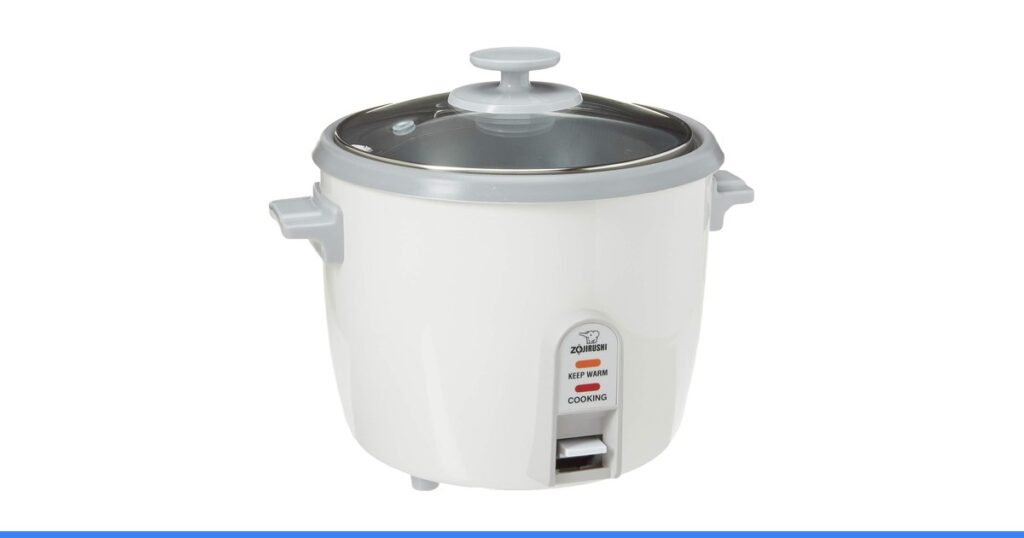
| Zojirushi 6-Cup Rice Cooker | 6-Cup, with a note to measure in the supplied cup ONLY | Size PRAISED at 497 – the only one of the four |
| AROMA 4-Cup Uncooked / 8-Cup Cooked | 4-Cup Uncooked / 8-Cup Cooked, and a chart with the conversion | Size mixed at 1,800; reliability an outright negative at 1,300 |
| BLACK+DECKER 6-Cup Rice Cooker | 6 cups cooked from 3 uncooked, in a 3/4-cup rice cup | The only rice capacity theme here – mixed at 309 |
| Dash Mini 2-Cup Rice Cooker | 2 cups cooked from 1 uncooked, scoop is 3/4 cup | Size mixed at 1,900 – and portion size PRAISED at 881 |
How We Check a Claim
Three checks. First, the number on the front – which cup it counts, and whether it is the uncooked rice or the cooked rice, because those differ by roughly double. Second, what each listing says that number means, in its own words, because three of these four publish the conversion. Third, what the review record says instead, and specifically whether buyers are arguing about the size or about the number.
Myth 1: Zojirushi 6-Cup Rice Cooker

The best record on this page, and the one listing here that tells you which cup to use without ever telling you how big it is.
What the listing promises
Its bullets describe a 6-cup cooker, steamer and warmer with a stainless steel steaming tray, a removable nonstick inner pan, a see-through glass lid, a keep-warm function that starts as soon as cooking ends, and 120 volts at 500 watts with a measuring cup, spatula and removable cord included. Then a note at the end: please ensure to measure rice in the cup that comes along with the product ONLY. That is the rule stated plainly. What is missing, uniquely among these four, is the number – no uncooked figure and no millilitre equivalent anywhere in the bullets.
What the review record says
4.5 stars from 12,299 ratings, the smallest crowd on this page. Six themes praised: performance at 1,500 mentions, rice quality at 699, functionality at 677, ease of use at 616, size at 497 and ease of cleaning at 409. That size figure is the one that matters here – it is praised on this record and argued about on the other three. One theme is disputed, keep warm at 232 mentions, where some buyers value it and others report it gets very hot around the edge of the lid. A praise-to-dispute ratio of 18.96, the best on this page by a wide margin.
What to check instead
Hold two facts: size praised at 497 mentions, and a listing that gives you the rule but not the number.
Seen on Zojirushi 6-Cup Rice Cooker (example product) — 4.5 stars from 12,299 ratings.
Myth 2: AROMA 4-Cup Uncooked / 8-Cup Cooked

The most explicit name of the four and a gallery chart that does the arithmetic – and the size theme is still disputed.
What the listing promises
The name gives you both figures: 4-Cup Uncooked and 8-Cup Cooked. Bullet 3 adds that the item holds up to 2 to 8 cups of cooked rice, that 8 cups is the cooked rice capacity, and that rice must be cooked in the cup that comes along with this product. Then a gallery tile headed WHITE RICE CHART states it outright: cups referenced are with the included measuring cup, and 1 rice measuring cup is 3/4 of a US cup, 180 millilitres. The table under it runs 1 cup uncooked to 2 cooked, 2 to 4, 3 to 6 and 4 to 8, with both columns carrying the same asterisk. On its own numbers, the 8 cups on the front is about 6 US cups.
What the review record says
4.5 stars from 65,202 ratings, much the largest crowd here. Six themes praised and led by quality at 8,900 mentions, the largest single theme anywhere on this page, then functionality at 4,700, rice quality at 4,100, ease of use at 2,600, value for money at 2,200 and ease of cleaning at 1,800. Size is mixed at 1,800, with some buyers finding it right for a small family and others calling it too small. And it carries the only outright negative on this page: reliability at 1,300 mentions, with buyers reporting the cooker stopping after a few months of use. One more thing worth reporting: its 6 SMART FUNCTIONS gallery tile has a caption underneath reading four versatile functions, and pictures four – which is what bullet 2 names as well.
What to check instead
A brand that publishes the conversion is doing more than most. Read the chart, not the name.
Seen on AROMA 4-Cup Uncooked / 8-Cup Cooked (example product) — 4.5 stars from 65,202 ratings.
Myth 3: BLACK+DECKER 6-Cup Rice Cooker

It explains the cup twice in one bullet, and it is still the one cooker on this page whose buyers dispute the number itself.
What the listing promises
Bullet 1 does the whole job: 6-Cup Cooked Rice Capacity, produces up to 6 cups of cooked rice using the included 3/4-cup rice measuring cup, 3 cups uncooked – and then, in the same bullet, use the included measuring cup for accurate portions as standard cups differ. It states the cooked figure, the uncooked maximum, the size of the cup and the reason all at once. On that conversion the 6 cups on the front is about 4.5 US cups. Around it: a removable nonstick pot for the dishwasher, a steaming basket, a measuring cup and serving spoon, and 300 watts in a 10 by 9 by 5.5 inch body.
What the review record says
4.4 stars from 36,951 ratings, and the weakest record on this page. Three themes praised – rice quality at 957 mentions, ease of use at 883, ease of cleaning at 499 – against five disputed. It is the only cooker of the four carrying a rice capacity theme, mixed at 309 mentions, and the summary reports buyers noting it does not make 6 cups of cooked rice. Alongside that: reliability mixed at 1,200, size mixed at 1,000, value for money mixed at 931, and durability an outright negative at 409 with several buyers reporting it breaking within two months. Its praise-to-dispute ratio is 0.61 – more disputed mentions than praised ones.
What to check instead
The clearest explanation on the page sits on the record that argues with the number. Explaining is not the same as fitting.
Seen on BLACK+DECKER 6-Cup Rice Cooker (example product) — 4.4 stars from 36,951 ratings.
Myth 4: Dash Mini 2-Cup Rice Cooker

The loudest size complaint here, on a record that carries no capacity theme at all. That distinction is the point.
What the listing promises
Its first bullet states the conversion without being asked: this small rice cooker makes 2 cups of cooked rice from 1 cup uncooked. Its GRAIN GUIDE gallery tile adds a red footer reading that measurements are based on a standard measuring cup, not the included measuring scoop, which is 3/4 cup. On that conversion the 2 cups in the name is about 1.5 US cups. The rest is a one-switch cooker with an indicator light and keep-warm function, a ceramic nonstick removable pot, glass lid, mixing paddle and measuring scoop, all hand-wash.
What the review record says
4.4 stars from 47,708 ratings. Six themes praised: performance at 3,300 mentions, rice quality at 1,200, ease of use at 1,200, appearance at 895, portion size at 881 and ease of cleaning at 880. Size is mixed at 1,900 – the loudest size dispute on this page – with some buyers finding it just right for one or two people and others calling it extremely small. Value for money is mixed at 923. What it does not have is a rice capacity theme. Its buyers argue with each other about whether a mini cooker is too small for them; none of them is reported saying it makes less than the two cups it claims. And portion size is praised on the same record.
What to check instead
A loud size complaint with no capacity theme behind it is a fit problem, not a shortfall. Read which one you are looking at.
Seen on Dash Mini 2-Cup Rice Cooker (example product) — 4.4 stars from 47,708 ratings.
What to Read Instead
Read the uncooked figure, not the cooked one on the front. On the published conversion of the three that give one, AROMA’s 8 cups cooked is about 6 US cups, BLACK+DECKER’s 6 cups cooked is about 4.5, and the Dash Mini’s 2 cups is about 1.5. That is arithmetic on the brands’ own numbers, not our measurement. Then check two things in the record. Does it carry a capacity theme at all – on this page only one of the four does, and that is the one where buyers report it does not make what the name says. And is the complaint about size or about the number, because they are not the same. The Dash has the loudest size dispute here and no capacity theme whatsoever: its buyers disagree with each other about whether a mini cooker is small, which tells you nothing about whether it delivers what it promised.
A cup that is not a cup is a measurement problem, and this kitchen has more than one: our electric griddle check does the same to an even-heating claim. For the pattern outside the kitchen, read our tech specs guide.
Frequently Asked Questions
Does a 6-cup rice cooker make 6 cups of rice?
Not six of your cups. Three of the four listings on this page state the conversion themselves: one rice measuring cup is three quarters of a US cup, or 180 millilitres. AROMA prints that on a chart tile in its gallery, Dash puts it in the red footer under its grain guide, and BLACK+DECKER writes it into its first bullet with the explanation that standard cups differ. On that conversion, BLACK+DECKER’s 6 cups cooked works out at roughly 4.5 US cups, AROMA’s 8 cups cooked at roughly 6, and the Dash Mini’s 2 cups at roughly 1.5. The arithmetic is the brands’ own equivalence, not a measurement we took.
Why are two of these both called 6-Cup?
Because the number describes different things. The BLACK+DECKER 6-Cup states in its bullets that it produces up to 6 cups of cooked rice from 3 cups uncooked, measured with the included three-quarter-cup rice cup, and that 3 uncooked is the maximum. The Zojirushi 6-Cup states no uncooked figure anywhere in its bullets – what it says is a note telling you to measure rice in the cup that comes along with the product ONLY. It gives you the rule and withholds the number, which is the opposite of what the other three do. Two products, the same figure on the front, and two different definitions underneath it.
Which rice cooker has the best review record?
The Zojirushi 6-Cup, on the smallest crowd here. It holds 4.5 stars from 12,299 ratings with six themes praised and one disputed, for a praise-to-dispute ratio of 18.96 against 7.84, 2.96 and 0.61. It is also the only one of the four where size comes back praised rather than argued about, at 497 mentions. The BLACK+DECKER sits at the other end on both counts: its ratio is 0.61, meaning more disputed mentions than praised, and it is the one record here whose buyers dispute the capacity figure. Those two extremes line up, which is worth noticing – though four products is a comparison and not a rule about the category.
Is the complaint that these are too small, or that they miss their number?
On three of the four it is the first, and on one it is the second, and the difference matters. AROMA, Dash and BLACK+DECKER all carry a mixed size theme – 1,800, 1,900 and 1,000 mentions – where some buyers find the cooker right for them and others find it too small. That is buyers disagreeing with each other. Only BLACK+DECKER carries a separate rice capacity theme, mixed at 309, and its summary reports buyers noting it does not make 6 cups of cooked rice. That is a complaint about the stated figure rather than about personal fit. The Dash is the clearest counter-example: it has the loudest size dispute on the page and no capacity theme at all, and portion size is actually praised on the same record at 881 mentions.
Do these cookers cook rice well?
All four records say so. Rice quality is a praised theme on every one of them – 4,100 mentions on the AROMA, 1,200 on the Dash, 957 on the BLACK+DECKER and 699 on the Zojirushi. Nothing on this page suggests any of them fails at the job. The argument in all four records is only ever about how much rice comes out, and that is why the cup figure is worth reading properly before you buy. Two of the four do carry other faults worth knowing: AROMA’s reliability is an outright negative at 1,300 mentions with buyers reporting it stopping after a few months, and BLACK+DECKER’s durability is an outright negative at 409 with reports of it breaking within two months.
What actually matters in this category
Researched from real buyer evidence by the Technocastel editorial team — last reviewed 22 August 2026.
When a number is printed on the front of a box, check what unit it is in before you check how big it is. Three of these four listings state that their cup is three quarters of a US cup – 180 millilitres – and they state it in a gallery chart, a footnote and a bullet. The information is published. It is just not printed next to the number it modifies.
Uncooked and cooked are roughly double, so which one a name uses changes everything. AROMA prints both and lets you pick. BLACK+DECKER prints the cooked figure on the front and the uncooked maximum in the bullets. The Zojirushi prints one figure and no conversion at all. Same word, three different amounts of help.
Look for a capacity theme in the review record, not just a size one. Three of these four have buyers arguing about whether the cooker suits them. Only one has buyers reporting that it does not make what the name says, and that is a different complaint with a different meaning.
Disclosure is not the same as clarity, and this page is the proof. Every one of these four listings explains its cup somewhere, and three of the four still carry a size dispute in the record. We are not claiming the wording causes the confusion – nothing here tests that – but a definition in a footnote is doing less work than a definition on the front.
Related guides
- For a rated capacity that is real but measured somewhere you are not, read our dehumidifier pint rating check
- For a kitchen page where the capacity figure sorts nothing at all, see our air fryer comparison
- For another kitchen claim tested against the record, read our electric griddle check
How this article was made. The ranking comes from the public review record — rating counts, star distributions and the themes owners repeat — tallied with software, then read, judged and written up by Abdelaziz Sabbah. We do not lab-test these products and no brand pays for placement; our full method is here. Review counts are a floor at the date above and prices change, so confirm both on the retailer’s page before you buy. As an Amazon Associate we earn from qualifying purchases — affiliate disclosure.